Display Temperature vs Data Logger Readings
12th February 2025
In medical refrigeration, maintaining precise temperature control is crucial for the safe storage of vaccines, medications, and other temperature-sensitive products. However, you may sometimes notice that the integral display temperature of your Shoreline appliance differs from the readings recorded by your data logger or secondary thermometer. This guide explains why this occurs and how to ensure accurate monitoring of your medical fridge.
What is Simulated Temperature?
The temperature shown on your Shoreline fridge’s digital controller is a simulated reading. This is a carefully calculated value representing the average internal temperature. Rather than fluctuating in real-time with every door opening or compressor cycle, this reading is stabilised to provide a more practical and reliable representation of the storage conditions. This prevents unnecessary alarms and ensures that temperature-sensitive items remain within safe limits.
The Role of Data Loggers and Secondary Thermometers in Medical Refrigeration
According to the NHS Green Book (Chapter 3: Storage, Distribution, and Disposal of Vaccines), it is recommended that all vaccine refrigerators be equipped with at least one independent maximum-minimum thermometer in addition to the integrated display. This ensures that temperatures can still be measured in the event of a power outage.
A secondary thermometer or data logger helps answer key questions in case of an incident:
- How long was the fridge without power?
- What temperature did the fridge interior rise to?
If you experience a power failure, these readings are essential in determining whether stored vaccines remain viable. Healthcare professionals should report this data to their vaccine supplier for appropriate guidance.
Why Might There Be a Difference Between Readings?
Differences between the fridge’s integral display and the data logger or secondary thermometer are common and can occur due to several factors:
Sensing Method
- The fridge’s digital display shows a stabilised, simulated temperature designed to reflect the internal environment where stored items are kept.
- The data logger or secondary thermometer often measures air temperature, which fluctuates more rapidly, particularly when the fridge door is opened or during compressor cycles.
Calibration Variations
- Shoreline fridges are designed and calibrated to strict medical refrigeration standards.
- Many data loggers and secondary thermometers are not calibrated to the same precision, leading to potential discrepancies in readings.
Placement of the Secondary Thermometer or Data Logger
- The location of the device within the fridge significantly impacts the readings.
- Temperature variations naturally occur between different zones of the appliance, especially in larger models.
- A thermometer or logger placed near the door, vents, or walls may record different temperatures than one positioned centrally within the storage area.
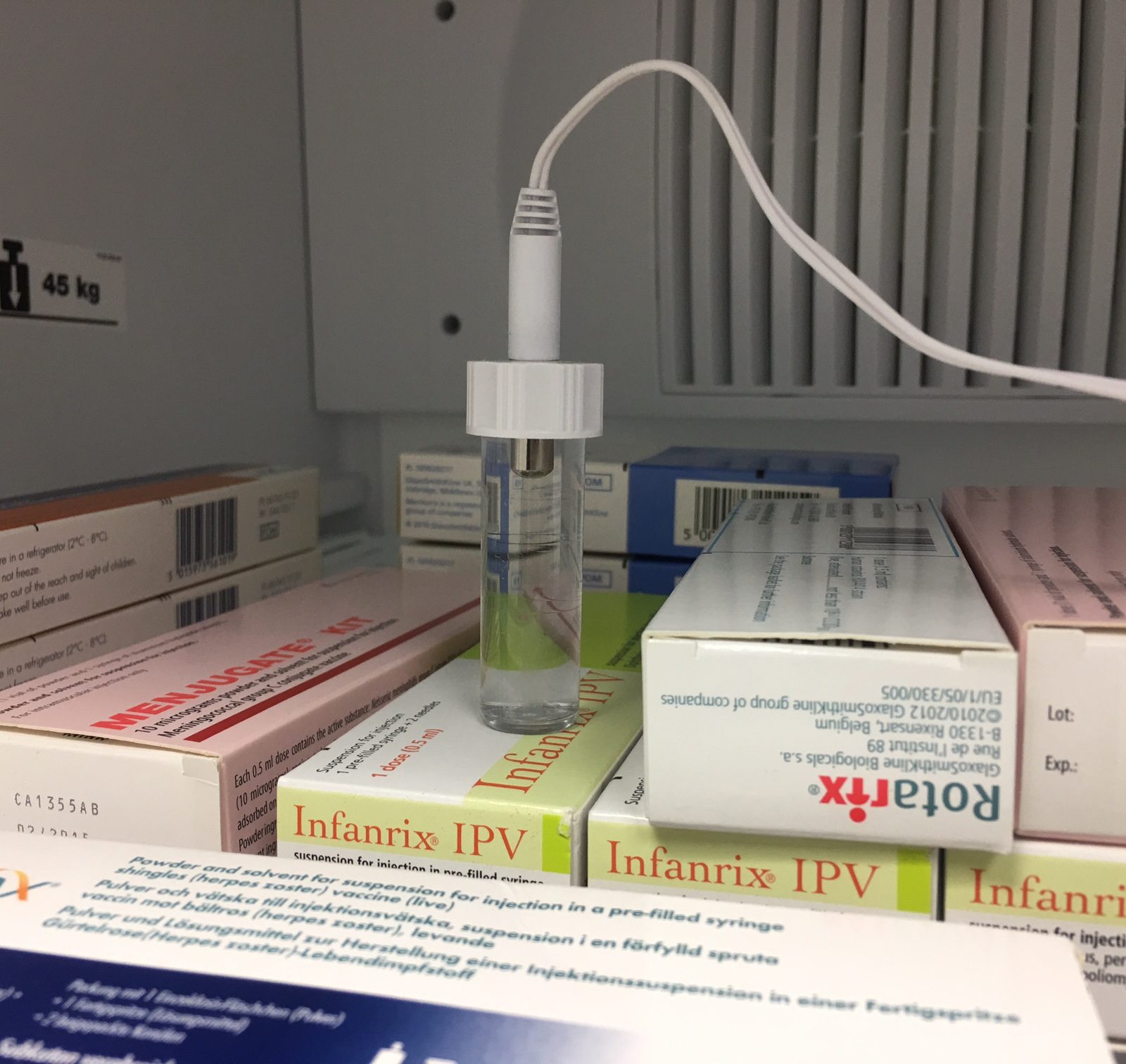
- DO NOT leave the sensor end of a secondary thermometer hanging in free air; it should be placed inside a package or immersed in a small liquid-filled vial to simulate product temperature.
How to Align Data Logger and Internal Thermometer Readings
If you want your data logger or secondary thermometer readings to be closer to your Shoreline fridge’s display, consider the following steps:
- Placement Matters: Position your data logger or thermometer probe near the fridge’s internal probe or in a central location where temperature fluctuations are minimised.
- Use a Glycol-Based Probe: Data loggers equipped with a glycol-buffered probe provide more stable readings, as they better mimic the temperature of stored products rather than reacting instantly to air fluctuations.
- Regular Calibration: Ensure your secondary thermometer and data logger are calibrated to industry standards to minimise inconsistencies.
- Understand Acceptable Variances: Some level of variation between the display and the secondary thermometer is normal. Focus on temperature trends over time rather than individual readings.
Understanding the differences between simulated fridge temperature and secondary thermometers or data logger readings is key to effective medical refrigeration management. While your Shoreline fridge provides a stabilised and reliable temperature for safe storage, secondary thermometers and data loggers offer valuable insights into temperature trends and potential fluctuations. By positioning these devices correctly and using a glycol-based probe style logger, you can achieve greater alignment between these monitoring methods and ensure the highest level of safety for your stored medical supplies.
For further advice, please contact Shoreline (UK) Ltd at 01903 733 877 or email ask@shoreline-medical.co.uk.